Pardalote Holt

Pardalote Holt
The centre of it all

Friday, September 19, 2014

Migratory ripples

As winter turns to spring and the weather warms birding can be very exciting at the Holt.  Migration isn't as mind-blowing as in the Northern Hemisphere, but it still happens and this is the season where we see it at its most active, which is why August is normally the top birding month of the year.  I say normally, because this year it was relatively subdued, but as I write this in mid-September, it has become obvious the season has just slipped a week or so. The season starts in mid-July with the arrival of the Grey Fantails and Eastern Spinebills. The former stay through until August and at times appear so numerous that you can't turn around without seeing one, but by mid-August they're gone.  The Eastern Spinebills stay longer, enjoying the flowering of the Grevilleas and are still busy in the bushes.  At the same time that the Fantails appear we get a flourishing of Golden and Rufous Whistlers singing their hearts out, and as the Fantails leave they recede back into the quieter corners of the bush, still there, but seemingly less confident once the Fantails have left.

Towards the end of the month both the jasmine and the grevilleas have built up blossoming steam and this brings in the little and Noisy Friarbirds, Scarlet and Blue-faced Honeyeaters, Silvereyes and Finches. As the weather warms and the insects become more numerous so do the Satin and Leaden Flycatchers.

At the end of the month we saw a big increase in the number of Wallabies around the grounds and this brought in a brace of Wedge-tailed Eagles hunting them.

Wedge-tailed Eagle looking for prey.

 One afternoon a pair of Wedgies tried to take one of the Blue Faverolles, but I was close enough to scare them off. The poor hen was wounded and badly shocked, but I am pleased to say that after a few weeks tender care she is recovering well and I hope she'll be able to return to the flock soon.

On the chook front things have kicked up a gear with the chooks laying like crazy and chicks pumped out of the incubators to move into the brooders. We have had some concerns over the fertility rate, but that could be the colder weather at the start of the month or the young age of several of the roosters, but here's some chick photos to coo over...

Salmon and a cross breed (Fav/Sussex)

2 Salmons, a Frizzle left and Blue right.

A Splash Faverolle

2-day old chicks in the brooder. They sleep a lot at this age.

A Blue and two Splash Faverolles

A mix of Blues and Splashes.

A Frizzle.

A Splash and three Blue Faverolle pullets.

And so on to the bird count.


Regulars  (seen at least 5 days in the week)

Australian Magpie
Bar-shouldered Dove
Bronzewing
Double-barred Finch
Eastern Spinebill


Eastern Spinebill

Galah
Laughing Kookaburra
Lewins Honeyeater
Magpie Lark
Noisy Friarbird


Noisy Friarbird

Olive-backed Oriole
Pacific Black Duck

Pacific Black Duck

Pied Butcherbird
Pied Currawong
Plumed Whistling Duck
Purple Swamphen

Purple Swamphen

Rainbow Lorikeet
Striated Pardalote
Sulphur Crested Cockatoo
Yellow-faced Honeyeater


Yellow-faced Honeyeater

Welcome Swallow
White-throated Gerygone
Wood Duck
Torresian Crow

 Common (Seen at least twice a week)

Black-faced Cuckoo Shrike
Dusky Moorhen
Golden Whistler

Female Golden Whistler

Grey Fantail
Grey Shrike Thrush
Little Friarbird


Little Friarbird

Noisy Miner
Pale Headed Rosella
Peaceful Dove
Rainbow Bee Eater
Silvereye
Wedge-tailed Eagle

Magnificent Wedge-tailed Eagle


Uncommon (Seen two to five times during the month)

Blue-faced Honeyeater

Blue-faced Honeyeater

Brown Cuckoo Dove
Brown Honeyeater
Grey Butcherbird
King Parrot
Little Corella
Rufous Whistler
Scarlet Honeyeater

Straw-necked Ibis

Straw-necked Ibis

White-throated Treecreeper

 Rare (Seen only once)


Brahminy Kite
Brown Falcon
Eastern Yellow Robin

Eastern Yellow Robin

Figbird
Grey Goshawk
Leaden Flycatcher
Masked Plover
Peregrine Falcon
Pheasant Coucal
Red-backed Fairy Wren
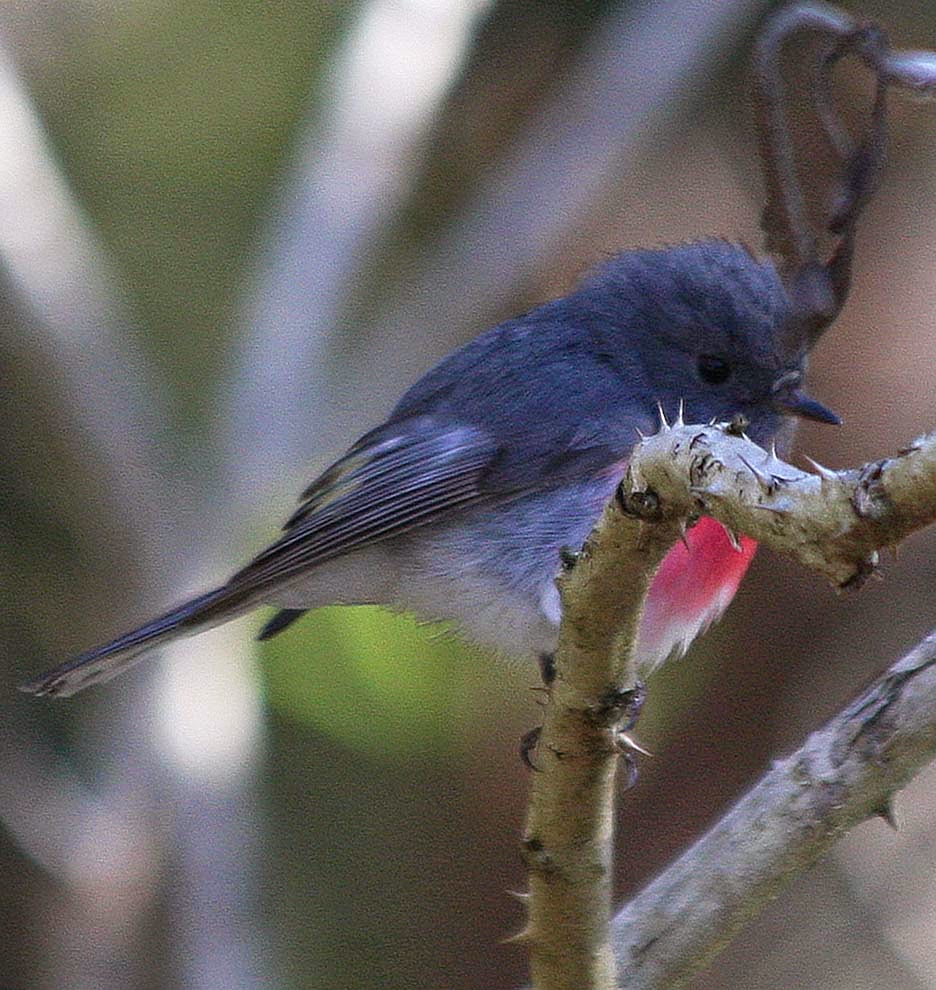
Rose Robin
Scaly-breasted Lorikeet
Spangled Drongo
Variegated Fairy Wren
White-faced Heron
White-headed Pigeon

White-headed Pigeon

Yellow-tailed Black Cockatoo

Totaling 63-species, a drop on previous Augusts' but September is shaping up well. That's all for now. See you next month.


Sunday, August 24, 2014

Mid-winter and the drought begins to bite.

It's been a bit of an odd winter, dry still, very dry and by August SE Queensland had been designated in drought along with most of the rest of the state, but that's not unusual. What was less usual was the amount of warmer, windy days.  Whether this has had any affect on the birds or whether it is something else, but the variety of species is down; having said that if you sit on the deck and look out over the dam the number of birds appears up.

The Plumed Whistling Duck colony has been having a seriously detrimental effect upon the dam and the clear waters have now turned into a muddy pool. Most of the Featherweed, that in previous years I've had to pull out myself, has been eaten, and the dam walls have lost most of their grass.  I could try and reduce their numbers by not feeding them, but they are such attractive ducks. Plumed Whistling Ducks are quite common and I think they are a very interesting bird. Male and female are virtually indistinguishable apart from a very small size difference, although it is said that if you grab them by the legs and hang them upside down the drake will quack and the duck will hiss (readers should not try this at home). They are nocturnal and so most nights they fly off to the nearby farms to feed on grass, before returning to the Holt for a late breakfast. The rest of the day is spent preening, sunbathing or just hanging about and chatting with the neighbours.  The ducks nest in rudimentary scrapes on the ground with males and females sharing sitting duties. Little appears to be known about their mating habits, because it's performed in the dark.

Plumed Whistling Duck on the dam

The dry weather has become a real issue. The earth and soil, poor as it is anyway, is bone dry and even the more resilient plants are beginning to show the effects of the drought. I'm using up water from the tanks to keep the garden beds going, but the natives just have to look after themselves. Having said that the Grevilleas are putting on a show of flowers, which is bringing in the smaller birds, especially the Honeyeaters.

Blue-faced Honeyeaters

Although this is the largest of the honeyeaters, as big as a Mistle Thrush back in the UK.

With the dry weather the grass is much less appealing, so we're seeing a lot more Wallabies and they're coming up very close to the house...up to the back deck in fact.  Very skittish, but I think that they're beginning to get used to us.

Peek-a-boo, I see you.

And on to the birds...

Regulars (Seen at least x5 per week)

Australian Magpie

Australian Magpie interested in the camera.

Bar-shouldered Dove
Bronzewing
Dusky Moorhen
Eastern Spinebill
Galah
Golden Whistler

Male Golden Whistler

Grey Fantail
Magpie Lark
Pacific Black Duck

Pacific Black Duck shares the bird feeder with a Pale-headed Rosella

Pied Currawong

Pied Currawong

Plumed Whistling Duck
Purple Swamphen
Rainbow Lorikeet
Striated Pardalote

Striated Pardalote

Sulphur Crested Cockatoo
Torresian Crow
Welcome Swallow


Welcome Swallows enjoying the sun at the tip of the old gum tree.

Yellow-faced Honeyeater

Common (Seen at least x2 per week)

Laughing Kookaburra

Laughing Kookaburras lining up for the evening joke fest.

Lewin's Honeyeater
Mallard
Noisy Friarbird
Noisy Miner
Peaceful Dove
Rainbow Bee Eater
Rose Robin

Male Rose Robin

Rufous Whistler
Silvereye

Silvereye

White-throated Gerygone
Wood Duck
Yellow-tailed Black Cockatoo


Uncommon (Seen 2-5 times per month)

Black-faced Cuckoo Shrike
Brown Cuckoo Dove
Brown Honeyeater
Double-barred Finch
Eastern Yellow Robin


Pair of Eastern Yellow Robins

Grey Butcherbird
Grey Shrike Thrush
King Parrot

Male King Parrot stretching for a seed pod.

Pale-headed Rosella
Pied Butcherbird

Pied Butcherbirds in full song.

Wedge-tailed Eagle
White-bellied Cuckoo Shrike
White-faced Heron
White-throated Treecreeper
White-throated Treecreeper...tree creeping!


Rare (Seen only once in the month)

Blue-faced Honeyeater
Brown Quail

The very shy Brown Quail

Satin Flycatcher

Satin Flycatcher

Spangled Drongo
Spotted Turtle Dove
Variegated Fairy Wren
White-throated Honeyeater


White-throated Honeyeater

Willie Wagtail

Which is 52-species, which is 4 below last July, reduced numbers of species are now becoming a worrying trend, but looking out across the grounds the numbers of birds, if not species, appears up.

Wednesday, July 30, 2014

Winter arrives and the world gets even drier.

All-in-all it was an odd month; very dry with only one very light shower over the whole month and a lot of windy days. I had a bit of a disaster when both of my camera lens gave up the ghost, but it did give me an excuse to upgrade to a 70-300mm lens, which is fantasadobi! (Not that it's made my camera work any better.

I lost a pullet to a Grey Goshawk early on in the month. My fellow chook breeders all started discussing how to kill the raptor when I mentioned this, and were somewhat aghast when I announced that I had no intention of killing such a beautiful bird of prey, however, something had to be done. The Goshawk stayed around for a couple of days and I made sure that he was aware that I was out and about, and despite giving the pullets a few more scares he was unsuccessful. Whilst he was missing, I was watching his tactics and it soon became obvious there was only one direction that he could really attack from and so a simple solution presented itself. I put up a 4m x 3m square white bird net, the sort of thing you protect your vegies with, as a panel blocking his attack vector.  It has worked superbly so far. As a net it hasn't been to affected by the winds, and we've had some strong ones since, and it's visible enough to put most birds off.

Anti-hawk net

A few birds have accidentally flown into it, having been startled by something, but they've just slid down the net and taken off again apparently with nothing more than a few ruffled feathers. Success!

In a fit of enthusiasm I've started erecting nesting boxes. Not as simple as back in the UK, you need to get them a lot further up the tree, and gum trees have less branches to fix them to, but after a while spent precariously balancing on my 5m ladder I eventually achieved the aim. Now we wait until Spring to see if anyone takes any notice of them

With a larger hole I'm hoping a pair of Parrots may take a shine to this one.

Nice view from the box, overlooking the dam.

On the chook front we finally got some Blue Faverolle chicks. We lost our Blue Faverolle cock to the heat earlier in the year and had to wait until the Splash cocks matured enough, but finally we have success.

Louis & Napoleon our Splash Faverolle cocks.

Blue Faverolle chicks making sure I've got the heat right.

And so, on to the birds...

Regulars (Seen at least x5 per week)

Australian Magpie
Bar-shouldered Dove


Bar-Shouldered Dove stepping out on the drive.

Bronzewing

female Common Bronzewing

Double-barred Finch
Dusky Moorhen
Eastern Spinebill

Eastern Spinebill feeding on the Pineapple Sage

Galah
Grey Fantail

Grey Fantail

Mallard

Monty Mallard on the bird table

Pacific Black Duck
Pied Currawong
Plumed Whistling Duck

Purple Swamphen


Purple Swamphen

Rainbow Lorikeet
Striated Pardalote
Sulphur Crested Cockatoo
Torresian Crow
Yellow-faced Honeyeater

Common (Seen at least x2 per week)


Black-faced Cuckoo Shrike
Brown Honeyeater
Grey Butcherbird
Grey Shrike Thrush
Laughing Kookaburra


Laughing Kookaburra

Lewin's Honeyeater
Noisy Miner
Rainbow Bee Eater
Welcome Swallow
White-throated Gerygone
Wood Duck
Yellow-tailed Black Cockatoo


Uncommon (Seen 2-5 times per month)

Golden Whistler
Grey Goshawk
Magpie Lark
Noisy Friarbird
Olive-backed Oriole
Pale-headed Rosella
Peaceful Dove
Rose Robin

Rose Robin

Rufous Whistler
Silvereye

Silvereye in a Wattle

Varied Sitella
Wedge-tailed Eagle
White-bellied Cuckoo Shrike
White-eyed Duck


White-eyed Duck (Hardhead) surrounded by a flotilla of Plumed Whistling Duck and a lone Pacific Black Duck

White-throated Treecreeper
Willie Wagtail
Yellow-rumped Thornbill

Rare (Seen only once in the month)

Blue-faced Honeyeater
Brown Goshawk
Figbird
Little Corella
Pale-headed Rosella
Spangled Drongo
Tawny Frogmouth


Which is 53-species, which is 10 below last June.  The number surprised me as there seemed to be a lot of birds around, especially the smaller species, but I'm confident the spread will improve.