Pardalote Holt

Pardalote Holt
The centre of it all

Tuesday, September 4, 2012

Spring is in the air


As sub-tropical South-East Queensland moves into spring with an El Nino event helping it along the weather becomes drier, warmer, and just bloody lovely. It's a great time to be around the Holt as the bird numbers are increasing and with spring in the air there's a lot of mating going on.  They drier trend has continued with only the lightest of showers on the last evening of the month. The ground sucked it up so quickly there was no sign of it by morning. 

The dry grass on the dam wall and Wattles in bloom.

 The lack of water is putting a strain on many of the plants, but the Jasmine and Comquats have flowered anyway and at the moment the house is wafting with the sweet aromas from the blooms.

Jasmine blooming in the shrubbery.

Along with all the flowering our Lemon Tree is straining with the weight of fruit, probably because it's growing next to the compost heap!

Our lemons
The other major change is the introduction of the chooks. We made the 7-hour trip down to Tamworth to collect a Cockerel and 6-chooks, but within days of them getting home they were struck with a respiratory disorder. Reference materiel suggests this isn't uncommon with chooks when they have been distressed through travel, but despite assistance from the vet, antibiotics and a lot of care and attention two of the chickens died. Pierre le Coq (the Cockerel) and the smaller chook now named Emma recovered and the two older chooks appeared unaffected, but it was very distressing to lose the two birds.

Our flock appears to have fully settled in now and the two older chooks (Diddy and Lucy) are laying regularly.  The two younger chooks (Joy and Emma) appear to be growing fast and their combs are developing so we expect them to join in before too long.  Pierre, well Pierre is performing his Cock's duties well by crowing at dawn and climbing atop any passing chook when the mood takes him.  The hope is that one of the ladies will become broody and we will be able to breed replacements for our losses.

Pierre and the girls
 The addition of chooks to the garden and household means more work as they need to be fed and watered and even put to bed as they seem to be avoiding going into the coop at night.  They're quite happy to go up the ramp during the day for laying purposes, but for some reason prefer sitting on an outside perch at night.  With the risk of local foxes and Dingos going for them we are making sure that they don't stay outside so each night we have to put them into the coop for lockdown.  Hopefully they'll get the idea before too long. Of course, the chooks are providing us with eggs and the straw and chicken poo from the coop will be a great addition to the compost heaps.

The trees of Spring
 The other visitors at this time of year is Koalas.  Most nights we can hear them growling in the trees and occasionally we're luck enough to see them as they are surprisingly difficult to spot.

Koala watching me watching him.

And onto the birds...

Regulars (Seen at least x5 per week.)

Australian Magpie 
Bar-shouldered Dove
Bronzewing
Brown Honeyeater
Bush Turkey


Bobby the Bush Turkey

Double-barred Finch

Double-barred Finches on the dam wall.

Eastern Spinebill
Eastern Whipbird
Galah
Grey Fantail
Golden Whistler

Laughing Kookaburra


Laughing Kookaburra

Lewins Honeyeater
Mallard Duck
Noisy Miner
Noisy Friarbird
Pacific Black Duck
Pale-headed Rosella 
Peaceful Dove
Pied Currawong
Rainbow Bee-eater
Rainbow Lorikeet
Rufous Whistler
Scarlet Honeyeater
Scarlet Honeyeater takes off.

Silvereye


Silvereyes

Striated Paradalote
Sulphur Crested Cockatoo
Torresian Crow
Welcome Swallow
Wood Duck
Yellow-faced Honeyeater

Common (Seen at least x2 per week.)

Black-faced Cuckoo Shrike
Brown Cuckoo Dove
Dusky Moorhen

Dusky Moorhen studies floating solar light.

Eastern Yellow Robin
Grey Shrike Thrush
King Parrot 
Little Friarbird
Magpie Lark
Pied Butcherbird
Scarlet-backed Fairy Wren
Spangled Drongo
Varied Sitella
Wedge-tailed Eagle
Willie Wagtail


Uncommon (Seen 2-3 times during the month)

Brown Treecreeper
Figbird
Figbirds (Male lower)

Forest Kingfisher
Leaden Flycatcher
Little Shrike-thrush
Little Wattlebird
Mistletoe Bird
Olive-backed Oriole
Satin Flycatcher
Scarlet Robin
Straw-necked Ibis


Straw-necked Ibis

Variegated Fairy Wren
Yellow-tailed Black Cockatoo
Yellow-rumped Thornbill
Weebill
White-faced Heron

White-faced Heron

White-throated Treecreeper

Rare (Seen only once during the month)


Forest Kingfisher
Grey Butcherbird
Little Egret
Little Pied Cormorant
Little Wattlebird
Rose Robin
White-bellied Sea Eagle

Which is 69-species!  Pretty good month for birdies.

A shady spot under the Tree Fern and next to a Jasmine.


Monday, August 13, 2012

Dry July

Two days of showers mid-month, but otherwise a typical Queensland winter with dry warm days and chilly evenings with the temperature dropping down to +1 degree on the odd night.  This is a great time of year for the birder as the number of small birds rise quickly and the surrounding bush appears to be full of mixed flocks containing Rufous and Golden Whistlers, Grey Fantails and Varied Sitella.  Around the Grevilleas we now have at least 4 pairs of Eastern Spinebills and the Scarlet Honeyeaters are appearing with increasing frequency, whilst the dam is becoming crowded with ducks. I have to admit its the small birds that get me going.  Standing quietly on the end of the dam with two dozen birds and a range of varieties just gives me a real buzz.

I was sitting on the back deck enjoying a cigar one evening when a Fruit Bat flew over swiftly pursued by a huge Barking Owl.  It was split seconds before both were lost in the gloom, but that's one awesome bird and it's great to know that they are around.

The big excitement at Pardalote Holt was twofold this month.  Firstly we had our solar panelling installed, meaning even more self sufficiency,


and we built a chicken coup (kit) as we plan to start breeding.

The new Chook House

We identified the chooks we wanted, Salmon Faverolle, and in next months post you will be introduced to Pierre le Coq and his harem of chooks.

One of the ramifications of installing the solar panels was that we had to remove three trees, two Tallow Woods and a Bloodwood that threw too much shadow onto the the panels.  It was a pity to have to take trees down, but the arborist said that the largest of the Tallow Woods was rotten and could have fallen on the garage, so it needed removing anyway.  For cost reasons I got the professionals to take them down, but I chose to take on the task of clearing up, so I have many weekends with the chainsaw and chipper in front of me.

Timberrrr!
This is a long job, but it's providing ample firewood, which is handy for the chilly nights we're having.  There you go, I spend $$$ on solar panelling to save the planet and then cut down trees and burn them on the the fireplace....madness!

The Birds of July

Regulars (Seen at least x5 per week.)

Pacific Black Duck
Wood Duck
Mallard Duck
Bronzewing
Bar-shouldered Dove
Peaceful Dove
Sulphur Crested Cockatoo
Galah
Rainbow Lorikeet
Pale-headed Rosella

Australian Magpie
Torresian Crow
Pied Currawong
Eastern Spinebill
Eastern Whipbird
Double-barred Finch
Brown Honeyeater
Yellow-faced Honeyeater
Lewins Honeyeater
Eastern Whipbird
Rainbow Bee-eater


Rainbow Bee-eater drinking on the wing.


Noisy Miner
Golden Whistler
Rufous Whistler
Silver-eye
Striated Paradalote

Striated Pardalote

Laughing Kookaburra
Grey Fantail
Bush Turkey
Welcome Swallow


Common (Seen at least x2 per week.)

Black-faced Cuckoo Shrike
Brown Cuckoo Dove
Eastern Yellow Robin
Grey Shrike Thrush

King Parrot 
Magpie Lark
Pied Butcherbird

Scarlet-backed Fairy Wren
Scarlet Honeyeater

Scarlet Honeyeater in the Honey Gem Grevilleas

Varied Sitella
Wedge-tailed Eagle
Willie Wagtail
Yellow-tailed Black Cockatoo


Uncommon (Seen 2-3 times during the month)


Brown Treecreeper

Forest Kingfisher
Little Shrike-thrush
Little Wattlebird
Mistletoe Bird
Satin Flycatcher
Scarlet Robin
Spangled Drongo
Variegated Fairy Wren

Female Fairy Wren

Yellow-rumped Thornbill
Weebill


Weebill


Rare (Seen only once during the month)

Barking Owl
Brown Goshawk
Grey Butcherbird
Rose Robin

Which is 58-species...whoo hoo!

June and the dry weather begins

I've been a bit tardy of late and I'm afraid the Blog has suffered somewhat, so I hope to put things right by bringing things back up to date with a couple of posts in the next couple of days.  The Australian winter has been wetter than previous years and as if to underline this June started with a real downpour, but as the month progressed a proper Aussie winter began to kick in and there were only a couple more damp days in the month.  At the same time the temperature dropped and cool drying winds kicked in and plant growth quickly slowed.

The Fey Path

 I've stopped any attempt at planting with the dry season building and instead got back to pruning, clearing up and cutting back the peak bush growth.  The frogs in the dam have fallen silent and even the cicadas are muted at this time of year.

On the last day of the month we heard the first Striated Paradalote call of the year.  The 'chup-a-chup' call of the Pardalotes was one of the first things I recognised when we first found the land and before we built the house.  They nest each year in a mud wall behind the garage and so far seem undisturbed by our arrival, even after we built the garage in front of their nesting wall!

June Birds

Regulars (Seen at least x5 per week.)

Pacific Black Duck
Wood Duck
Mallard Duck
Bronzewing
Bar-shouldered Dove
Peaceful Dove
Sulphur Crested Cockatoo
Galah

Galahs

Rainbow Lorikeet
Pale-headed Rosella
Australian Magpie
Torresian Crow
Pied Currawong
Eastern Spinebill

Eastern Spinebill

Eastern Whipbird
Double-barred Finch

Double-barred Finch

Brown Honeyeater
Yellow-faced Honeyeater
Lewins Honeyeater
Rainbow Bee-eater
Noisy Miner
Rufous Whistler

Rufous Whistler

Laughing Kookaburra
Grey Fantail

Grey Fantail

Bush Turkey

Common (Seen at least x2 per week.)

Willie Wagtail
Brown Cuckoo Dove
Pied Butcherbird
Golden Whistler

Golden Whistler

Black-faced Shrike Thrush
Noisy Friarbird
Scarlet-backed Fairy Wren
Wedge Tailed Eagle

Uncommon (Seen 2-3 times during the month)

Blue-faced Honeyeater
Collared Sparrowhawk
Grey Shrike Thrush
King Parrot
Magpie Lark
Scarlet Honeyeater
Spangled Drongo
Variegated Fairy Wren


Rare (Seen only once during the month)

Azure Kingfisher
Azure Kingfisher

Intermediate Egret
Little Pied Cormorant
Rose Robin
Striated Pardalote
Varied Sitella
Yellow-tailed Black Cockatoo
White-bellied Sea Eagle

Which is 49 species for this month, happy birding!

Monday, June 4, 2012

A dry winter month...at last!

After all the rain in the first quarter it has been quite a relief to have a dry month, which is the way that it's supposed to be at this time of year (Winter) in Queensland.  Overall we've had warm dry days with the temperatures rising to the mid-twenties and cool evenings with the thermometer reading down to 7 degrees, which although freezing to your native coastal Queenslander is still mild to a Pom like myself.

Winter is an interesting time of year for the garden here as most plants slow their growth whilst others burst into bloom.  It's a period when I actually feel as if I'm winning the battle against the Kangaroo Grass and the Blue Billy Goats weed as I spend long hours with the brush cutter on the weekend.  But the real bonus at this time of year is the Grevilleas coming into flower and several plants fruiting, which brings in a host of small birds and keeps the possums happy.

Grevillea

There are a huge variety of Grevilleas, but they all share the same traits of being highly attractive to Honey Eaters for their nectar and to Lorikeets for their pollen. For those of you who are thinking of planting Grevilleas the good old Honeygem is hard to be beaten as reliable and popular with the birds, but the two that really attract and retain the Honeyeaters are the Marmalade and Firesprite Grevilleas.

Another favourite amongst the Honey Eaters are the Banksia's that, like the Grevilleas, come in a variety of shapes, colours and sizes.


Banksia flower
Banksia seed pods


Banksia bush

The candle like flowers on this Banksia grow to almost a foot long.

Banksia flowers

These gorgeous 'Roman Candles' give a Christmassy feeling to the garden.


Poison Peach

A native that a range of  birds adore is the Poison Peach, which is apparently poisonous to cattle, but adored by Honeyeaters and in particular Lewin's Honeyeaters are over this bush constantly. Other fruits that ripen at this time of year are figs, which are much loved by the possums, and each morning there's a fresh pile of half munched fruit beneath the trees.


Possum chomped figs


On the ornamental non-native front (rare in my patch) the gingers are dying back, but this Costa Rica Beehive Ginger has decided to go against the season and bloom anyway.

Beehive Ginger

On the birding front its the time for the small birds.  The Honeyeaters are busy in the Grevilleas and we see mixed flocks of Varied Sitella, Rufous and Gold Whistlers, Silver Eyes and Thornbills. A good set of bino's is handy as most of these small birds flitter about at the treetops, but I have been very gratified to see that my planting has been a success and increasingly we are seeing more at shrub level near the house.


The 'shrubbery' below the deck.

This months birds....

Regulars (Seen at least x5 days per week)

Pacific Black Duck
Wood duck
Mallard Duck
Bronzewing
Bar-Shouldered Dove
Peaceful Dove
Sulphur Crested Cockatoo
Rainbow Lorikeet

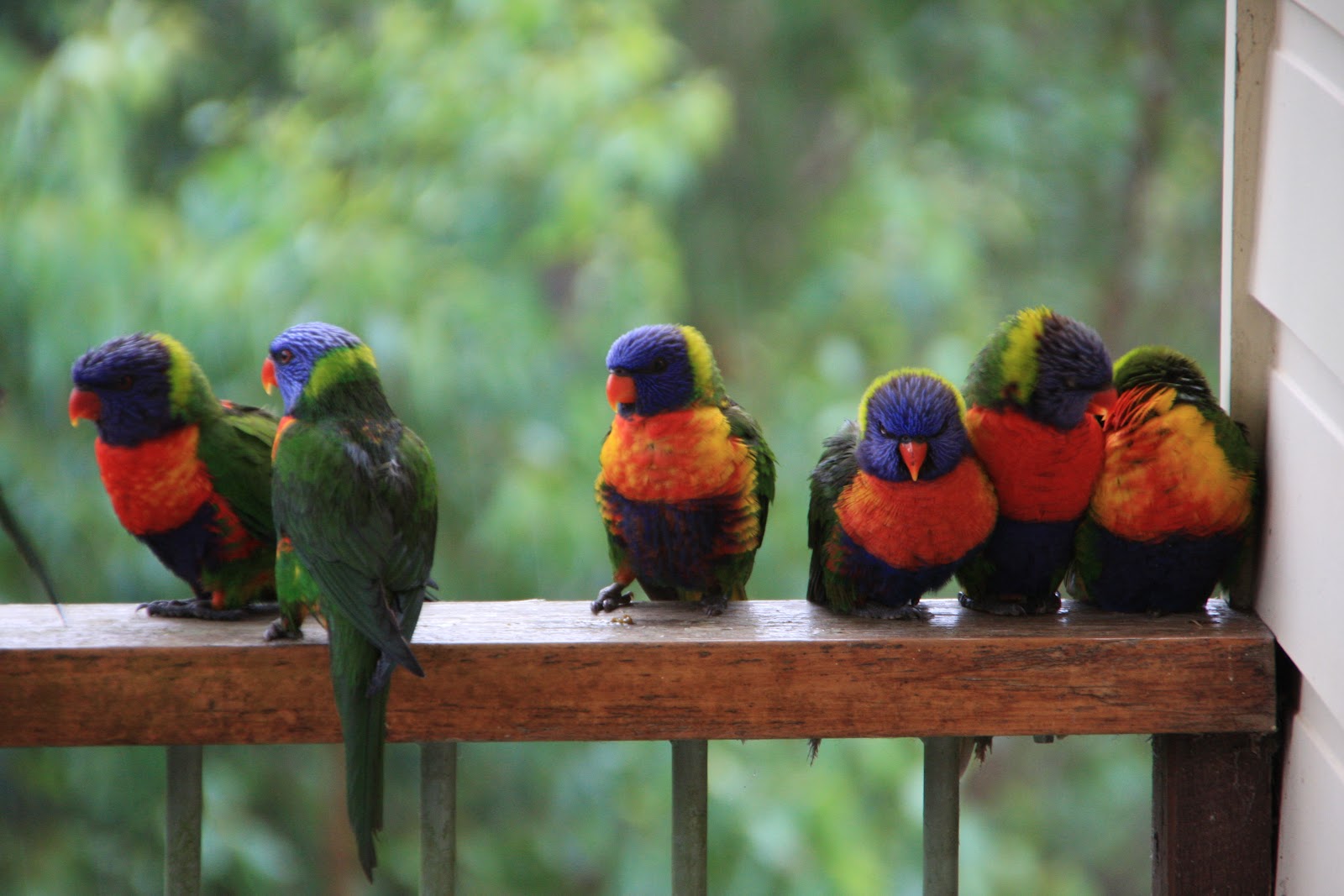
Let's just cuddle up...


...or if there's food involved...

Galah
Eastern Spinebill
Brown Honeyeater
Lewin's Honeyeater
Yellow-faced Honeyeater
Double-barred Finch
Noisy Miner
Noisy Friarbird
Grey Fantail


Grey Fantail

Torresian Crow
Australian Magpie


Australian Magpie

Pied Currawong
Pied Butcherbird


Immature Pied Butcherbird

Butcherbird (Dad!)

Rainbow Bee Eater
Magpie Lark
Laughing Kookaburra
Bush Turkey
Welcome Swallow
Willie Wagtail

Common (Seen at least twice a week)

Brown Cuckoo Dove
Eastern Yellow Robin


Eastern Yellow Robin

Pale Headed Rosella
Brown Cuckoo Dove
Eastern Whipbird
Golden Whistler

Golden Whistler

Rufous Whistler


Female Rufous Whistler

Male Rufous Whistler

Wedge-tailed Eagle

Wedge-tailed Eagle


Black-faced Shrike Thrush
Grey Shrike Thrush
Variated Fairy Wren
Yellow-rumped Thornbill

Uncommon (Seen x2 - x3 per month)

Grey Teal


Grey Teal  with Pacific Black Duck

Grey Teal


Glossy Black Cockatoo
King Parrot
Pied Cormorant
Scaly-breasted Lorikeet
Silvereye
Spangled Drongo
Varied Sitella
Weebill

Rare (Seen once in the month)

White-bellied Sea Eagle

White-bellied Sea Eagle
Mistletoe Bird
Satin Flycatcher
Little Egret
White-faced Heron

White-faced Heron

Straw-necked Ibis
Scarlet Honeyeater
White-headed Pigeon

Which is 55-species seen in May, not bad for one back yard!

So as the sun drops down over Mount Tamborine and the last rays of light graze the tips of the Kangaroo Grass under the gums...


...and the last reflections glide across the still waters of the dam...


...it's time for bed said Zebedee,