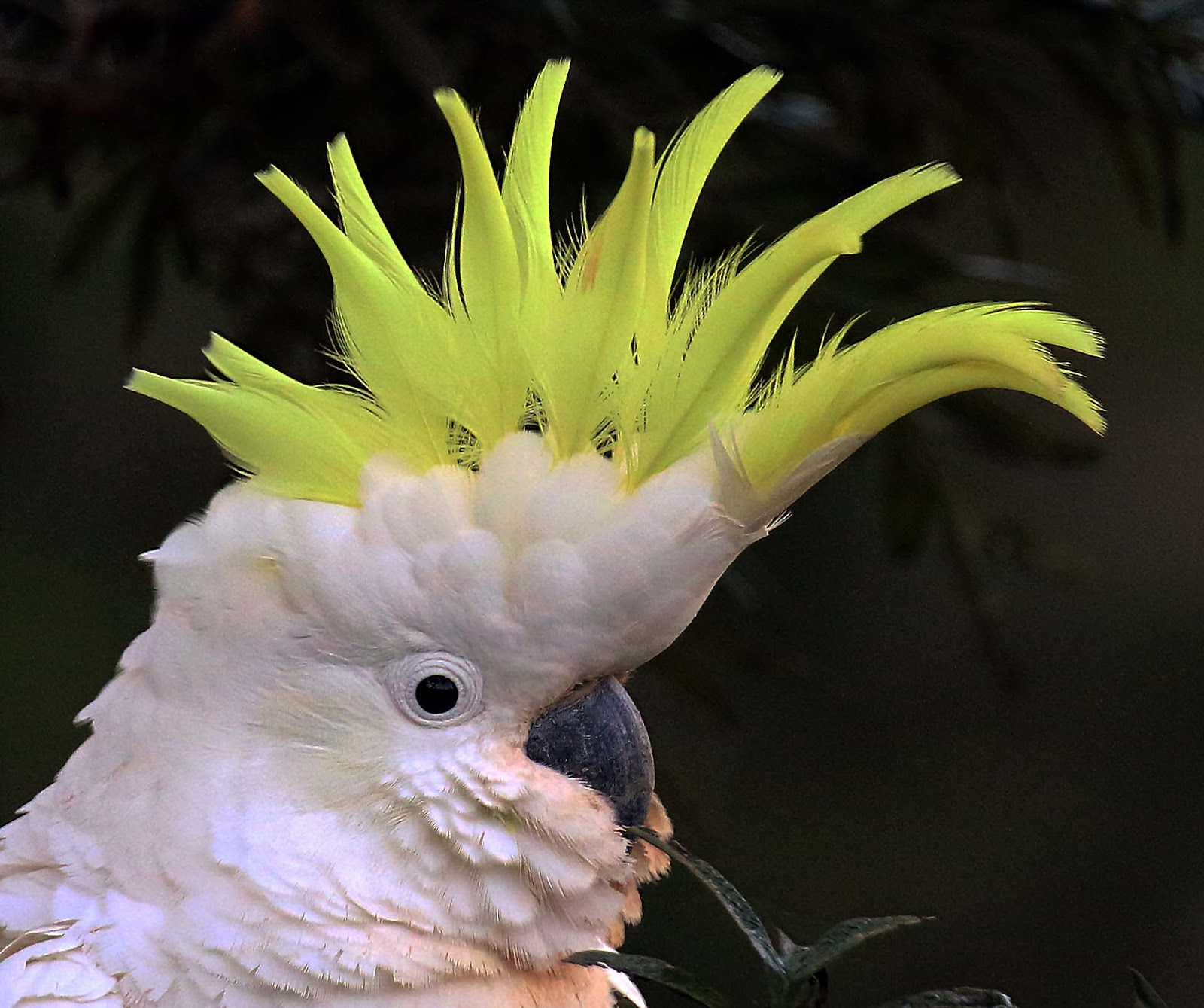
We are all creatures of habit and I am no exception to that. In reality I am probably more so than most and each morning I rise, shower, let the chooks out of their coups, change their water and feed them, feed the cats, the dogs and the tropical fish and the replenish the feeders for the wild birds before sitting on the deck for my morning cuppa. It's about then, between 7.15 am and 7.45am, or thereabouts, that I see and record most of the birds on my sighting lists. It starts with the ducks, that queue up on the dam wall when I appear, and then the Sulphur Crested Cockatoos, Rainbow Lorikeets, Galahs and a lone pair of Little Corella that appear and start the squabbles on the bird feeders. By the time that I am finishing my cup of tea the parrots have often largely moved on and the pigeons, doves and finches appear to sweep up all the smaller seed and scraps and then, as the sun finally starts to reach the garden the Honeyeaters and Spinebills make their entrance on the Grevilleas. I've wondered whether the suns warmth is needed to loosen up the nectar, but they might just feel the cold a little more than the larger birds. Later in the day when I stop for lunch, collect the mail, or step out onto the balcony for a cigar is usually when I pick-up the less common birds, especially those that appear to be just passing through. Some of the different species come and go with the seasons. Now is the time for the Grey Fantails, Rose Robins and Eastern Spinebills and by July I expect to see the Scarlet Honeyeaters appearing in numbers again. I'd have thought that by now I'd have picked up all the regulars in the garden, but there are always surprises and I'm beginning to suspect that a pair of White-browed Scrub Wren have set up home in one of the narrow steep sided intermittent creeks that climb from the Lap Swamp to the heights of the hill behind us. I'm not totally sure as I hear what I think is their angry staccato outbursts from behind the foliage, but I'm keeping a careful eye on the area now and we'll see what turns up.
It can be taken for granted that birds bring me great joy in general, but when something unusual turns up in the garden its a real treat. It doesn't need to be a rare bird in the region, just something that I don't normally see at the Holt and this month it was an Australian Grebe. This smaller waterbird appeared after some rain, the dam waters being freshened up and presumable bring the small Rainbows (minnow size fish) nearer to the surface.
 |
| The Plumed Whistling Ducks were very curious about the newcomer... |
 |
| Some were less than amused and piped to warn him away... |
 |
| but with your head underwater you probably don't hear much. |
 |
| but he finally got the message. |
 |
| The Pacific Black Duck were altogether far more sanguine about the grebe's appearance. |
 |
| and the Grebe? Well he (or she) just ignored them all and did his own thing. |
Having said that every now and then the regulars can get up to something that is really amusing. The Rainbow Lorikeets in particular are always up to something, this time just preening after some rain, but they can be such fun to watch.
 |
| Thoughtful pose |
 |
| Bemused pose |
 |
| Rainbow Lorikeets seem quite prone to getting very wet. |
 |
| That's it, shake it out! |
Every now and then there's a change to the grand scheme of things. In November 20012, after the big hail storm that smashed us, the Plumed Whistling Ducks changed their status from rare visitors (usually a pair or four around Christmas) to become all year round residents. In their case there was the dramatic storm that heralded the change, but I'm becoming increasingly confident that the Rainbow Bee Eaters are moving into the all year resident status as well. These stunning birds spend much of their time high in the canopy and leaping skyward to catch a passing flying insect, but each day they come down to the dams and swoop across the water and then splash, stop in mid-flight, dunk themselves and then soar up onto a branch to preen. Unfortunately my camera skills are not to the level that I've really been able to catch this activity yet, but I'll keep working on it.
 |
| Returning to his perch, high in the gums, with his catch. |
 |
| The Bee Eater then beats his prey into submission before eating it. |
 |
| and then settles down ready for the next foray. |
Regulars (seen daily)
Australian Magpie
Brown Honeyeater
Common Bronzewing
 |
| The male Common Bronzewing |
Double-barred Finch
Eastern Spinebill
 |
| Eastern Spinebill on his favourite Fire Sprite Grevillea. |
Galah
Grey Fantail
Little Corella
Pacific Black Duck
Peaceful Dove
 |
| Tiny Peaceful Doves are all year residents. |
Pied Currawong
Plumed Whistling Duck
 |
| A few of the 60+ Plumed Whistling Ducks that call the Holt home. |
Rainbow Bee Eater
Rainbow Lorikeet
 |
| Hard to beat the colours of a Rainbow Lorikeet |
Sulphur Crested Cockatoo
Torresian Crow
Common (Seen weekly)
Bar-shouldered Dove
Golden Whistler
 |
| Male Golden Whistler juggling a grub |
 |
| Female Golden Whistler may not be as colourful, but has gorgeous eyes. |
Grey Butcherbird
Grey Shrike Thrush
Laughing Kookaburra
Lewins Honeyeater
Striated Pardalote
 |
| A Striated Pardalote |
Welcome Swallow
White-throated Gerygone
White-throated Honeyeater
Willie Wagtail
Yellow-faced Honeyeater
Uncommon (Seen occasionally)
Blue-faced Honeyeater
 |
| Blue-faced Honeyeater lurking in the Honey Gems. |
Brown Thornbill
Collared Sparrowhawk
 |
| Collared Sparrowhawk causing the usual panic amongst all the other birds |
Eastern Yellow Robin
King Parrot
Noisy Friarbird
Noisy Miner
Olive-backed Oriole
Pale-headed Rosella
Rose Robin
 |
| The rather gorgeous male Rose Robin |
Silvereye
Wedge-tailed Eagle
 |
| A magnificent Wedge-tailed Eagle |
White-faced Heron
 |
| A White-faced Heron hunting in the Lap Swamp. |
Yellow-tailed Black Cockatoo
 |
| It's not that uncommon to see a flock of a dozen or so Yellow-tailed Black Cockatoos passing through. |
Rare (Seen but once)
Australian Grebe
Black-faced Cuckoo Shrike
 |
| Black-faced Cuckoo Shrike with Rainbow Bee Eater in the background. |
Buff-rumped Thornbill
Little Egret
Magpie Lark
Mistletoebird
 |
| Mistletoebird with Mistletoe.... |
Pied Butcherbird
Rufous Whistler
Tree Martin
White-browed Scrubwren
Wood Duck
Yellow-rumped Thornbill
and that's all for now...and by the way, it finally rained!