Pardalote Holt

Pardalote Holt
The centre of it all
Showing posts with label #tropical gardening. Show all posts

Sunday, October 30, 2022

October and summer hastens toward us

 Its been getting warmer in Emerald but wetter too, much wetter than normal according to the locals. Over one weekend, apart from some pretty impressive lightening storms that had Tolkien shivering in the bed next to me, we had 240 ml in the weather gauge with similar amounts recorded around town. Now one could argue that this big splash of water will have affected my ollas experiment, and undoubtedly it did, but things dry out very quickly here and whilst other plants required daily watering the seedlings near the Ollas thrived.

The before shot

Add water
Add water
and about 5-weeks later...

The turnip seeds around the Ollas are looking healthy

and the Zucchinis are belting along

Unfortunately the Bitter Gourds didn't show at all, so I shall have to retry that experiment.

Emerald and its locale is continuing to throw up interesting birds and beasties for me to admire. This one caught me by surprise as I was about to do my dhobi (laundry for non-Marines) 

Larry the lizard


Interesting critter

I have been spending some time up on Fairbairn dam wall trying to improve my ariel photography which has been sort of fun and sort of frustrating,


Whistling Kite

Marbled Teal

Nankeen Kestrel

Whistling Kite

Gull-billed Tern

Tern

Nankeen Kestrel

Silver Gulls and a deceased Barramundi

A snack for an Australian Raven

An ancient Darter
A Black Kite

The Whistling Kite


Meanwhile, back at the house...

A gaggle of Apostlebirds

A cute Fairy Martin

The Singing Honeyeater

and a Crested Pigeon

and that's about it for now.

Thursday, September 29, 2022

Spring, Summer, Wet, Dry....

 Things can geta bit confuddling up here as the seasons are not so pronounced. Not really the four seasons from down south or in Europe, but nor the two wet and dry of the tropics. It's kind of fuzzy so I'm just having to learn as I go along.  One thing I do know is that the summers here are long and usually pretty dry. Water is metered in Emerald and I understand the bills can be high so watering your garden can be an expensive hobby. So first up I'm planning on gradually getting rid of most of the lawns, not much use anyway. That will take some time but after researching on You Tube I've come up with some more immediate projects.  First off, Ollas. Ollas (Spanish term) refers to earthenware pots that are dug into the ground and filled with water so that they slowly sweat irrigation into the surrounding soil.  Really good as the water is less affected by evaporation and targeted to where you want it so here we go...


Step 1 is to glue the pots upside down into their saucers making a waterproof seal with a silicon glue and then strengthen the structure by applying mortar between the pot and saucer.  Easy to do but a little time consuming as the mortar needs a week or so to dry properly.


Now place the pots out providing an irrigation diameter of about 2' for each Olla.


Next step is to dig them in ensuring there are no air bubbles around the pot. Do this by soaking the soil around them and so collapsing any hollows.


Now we fill the pots with water and stopper them with a cork or a stick. The only thing left to do is plant and apply mulch. I've planted Bitter Melon seeds to start with and I'll be adding a variety of vegetable seedlings as they grow. We'll look in on them in the future and see how they go.

Onto the birds....

My list of Emerald birds is growing as I've found Weebills (Australia's smallest birds) and nesting in one of the palms are a pair of White-breasted Woodswallow. Old familiars from down south have shown up including Figbirds and Sacred Kingfisher. 

Weebill with cobwebs

White-breasted Woodswallow


Sacred Kingfisher

Figbirds (male with red eye patch)


Grey-crowned Babbler

It is surprisingly noisy around the house, particularly during the dawn chorus  period, when Willy Wagtails lead the morning choral. They are often joined by the Brown Honeyeaters, Olive backed Orioles and Figbirds along with the Rufous Whistlers. Anyone who tells you that Australian birds don't sing can be safely ignored!

Willy Wagtail

Spotted Bowerbird

Juvenile Brown Honeyeater

The yellow at the crease of the bill indicating that this is a juvenile honeyeater.


Double-barred Finch


Juvenile Rufous Whistler

Female Rufous Whistler

Superb Fairy Wren (male)

Superb Fairy Wren (Female)

Juvenile Pale-headed Rosella

Straw-necked Ibis


Pied Currawong

Collared Sparrowhawk


With the almost constant attention of the Sparrowhawk it's surprising the flock of sparrows doesn't seem to be shrinking, but they seems as happy as ever.


Male House Sparrow

Well that's about it for September, See you all next month.


Sunday, February 28, 2021

Summer rains and the rainforest creeps closer

 For those of you who don't live in Australia we have had a wet summer. La Nina has been active and according to the news we've had the soggiest summer in 4-years. Figures have been bandied about but our little corner of SE Queensland has been very damp with some dam filling downpours and steady rain throughout. The effect on the Holt is very visible with green stuff shooting up all over. Unfortunately this has included the invasive weeds and I've been forced to put the backpack on a conduct some spraying. I dislike using poison for a variety of reasons but removing some weeds by hand just isn't feasible due to the need to get the entire root system.

Singapore Daisy

Singapore Daisy is an attractive ground cover and popular with insects but it causes rashes on the dogs skin and will quickly take over if you don't deal with it.

Mother of Millions

Mother of Millions is well named, a fleshy plant that spreads like wildfire and needs to be removed as soon as it appears.

Mistflower

Another attractive groundcover which produces small flowers. It loves the banks of creeks and spreads quickly but care must be taken or the poisons can leech into the water.

On a far more positive note the lush foliage has attracted some of the rainforest birds down from the mountain and Whipbirds have been calling throughout the season.  We've also had visits from a pair of Little Shrike-Thrush which is a first for the Holt.
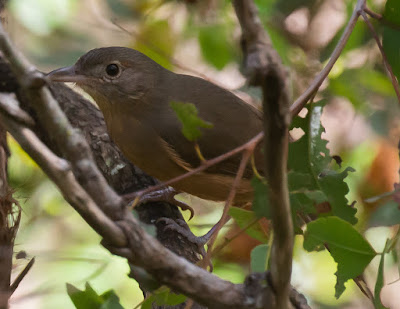
Little Shrike-Thrush

The Little Shrike-Thrush is a busy mid-sized insectivore that hops around in the mid-foliage searching for grubs. It's difficult to capture due to its frenetic activity, but the Whipbird is even harder.
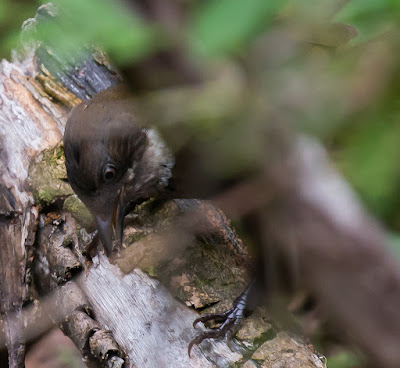
Eastern Whipbird
Eastern Whipbird

Whipbirds prefer the lower ground cover and will often search for food under fallen fern fronds and logs. They are a challenge to photograph and I can't say that I've ever managed a decent shot of one.

With the heat and humidity other critters have been abundant.


Golden Orb spider
Golden Orb Spider


Golden orb Spiders have been spinning their massive webs across the forest, trapping flying insects. This is a female with the far smaller (and out of focus) male sitting carefully distant above it.  Their webs can stretch for 10m or more and are surprisingly strong and sticky.

Green Tree Snake
Green Tree Snake

Venomous snakes are legendary in Oz but this is the harmless and very beautiful green tree snake. They are about as thick as your thumb and about a metre in length when grown. This one spent a good time slowly meandering around the tree ferns.  They have no fangs nor venom and are quite inquisitive so if you don't spook them they'll stop and have a look at you. They feed on frogs, lizards and small mammals.

Palemouth
Palemouth

The dams attract a host of Dragonflies but this Palemouth prefers the mid canopy and shrubs. It's a small dragonfly coming in at around 16mm in length, but a pretty insect with its ochre stripes. Below are a few of the dragonflies more commonly seen skimming the waters of the dam and enjoying the lilies.

Blue Skimmer
Blue Skimmer

Yellow and Black Flutterer

Australian Tiger
Australian Tiger munching a bug


Australian Tiger
Almost done!

Mating Billabong Damselflies


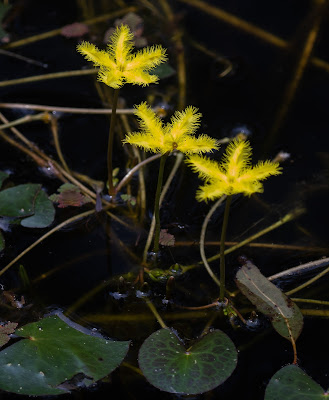
And here are the hosting lilies!


Water Snowflakes
Water Snowflakes

Marshwort
Marshwort

Away from the dams the treetops have been noisy at nights as the Koalas have been growling out their mating calls. For a relatively small furry creature they can make surprisingly deep bellowing cries that can carry for a considerable distance.


Koala
A mid-morning doze after all the singing.

The wet has also brought out the frogs, in numbers!

Graceful Treefrog
Graceful Treefrog climbing the window


Meanwhile back at the ranch our turkeys have settled in nicely and Mildred (pictured) has recently gone broody and is sitting on a clutch of eggs.


Mildred

and onto the birds....

Regulars

Australian Magpie
Bar-shouldered Dove
Brown Honeyeater
Brown Thornbill
Buff-rumped Thornbill
Bush Turkey
Cicadabird
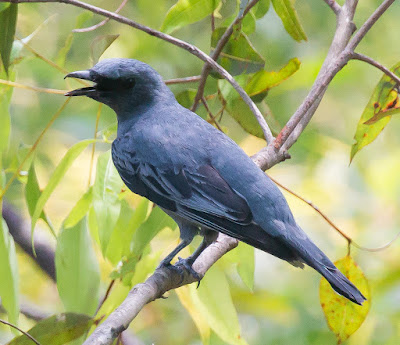
Cicadabird
Cicadabird


Common Bronzewing
Dollarbird
Double-barred Finch
Eastern Spinebill
Forest Kingfisher
Galah
King Parrot
Laughing Kookaburra
Little Corella
Noisy Friarbird
Noisy Miner
Olive-backed Oriole
Pacific Black Duck
Peaceful Dove
Pied Butcherbird
Pied Currawong
Plumed Whistling Duck

Plumed Whistling Duck

Plumed Whistling Duck


Rainbow Lorikeet
Sacred Kingfisher
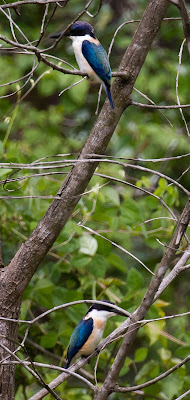
Sacred Kingfishers
Sacred Kingfishers


Scarlet Honeyeater

Scarlet Honeyeater

Scarlet Honeyeater
Scarlet Honeyeater


Spangled Drongo

Spangled Drongo


Striated Pardalote
Sulphur Crested Cockatoo
Torresian Crow
White-throated Gerygone
White-throated Honeyeater

White-throated Honeyeater


Yellow-faced Honeyeater


Common (Seen Weekly)

Channel-billed Cuckoo
Eastern Yellow Robin
Golden Whistler
Grey Shrike-Thrush
Leaden Flycatcher

Leader Flycatcher


White-bellied Cuckoo Shrike
Willie Wagtail
Yellow-rumped Thornbill
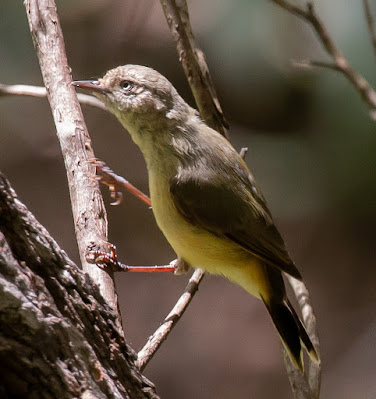
Yellow-rumped Thornbill


Uncommon (Seen occasionally)

Black-faced Cuckoo Shrike
Crested Pigeon
Eastern Boobook
Eastern Whipbird

Eastern Whipbird


Figbird
Little Friarbird
Little Shrike-thrush
Little Wattlebird
Magpie Lark
Masked Plover
Pacific Baza
Pale-headed Rosella
Rainbow Bee Eater
Rufous Whistler
White-throated Treecreeper

White-throated Treecreeper


Rare (Seen once)

Scaly-breasted Lorikeet
Yellow-tailed Black Cockatoo

and that's all for now folks!