Pardalote Holt

Pardalote Holt
The centre of it all

Saturday, January 31, 2015

Summer rains arrive...

 December comes and so does the rain, the heat and the storms, but overall we didn't do too badly.  The storms were relatively mild and the rain heavy enough to give the parched soil a good drink. The wallabies certainly appreciated it and throughout the month we were graced by a number of Red-necked Wallabies grazing on the fresh shoots on the dam wall.

Red-necked Wallaby trying out the fresh grass on the dam wall.

and trying out a bit of vine growing through a Bougainvillea.


One area of fascination for me was the family of Pacific Black Duck that appeared on the dam on the last day of November.  Initially there were ten ducklings, but within a couple of days that dropped to seven. I have no idea what got them, but the list of possible assassins is long. Snakes, Lace Monitors, Hawks, Falcons, Harriers, Kookaburras and foxes are but a few of the potential killers. Towards the end of the month Mom and the seven ducklings disappeared for a week and when they reappeared there were six.  Within a couple more days they were down to four, but now, a month later the remaining four would appear to be large enough to be able to fend for themselves and I've been watching them flapping their wings in preparation for flight.

The original ten.
By now at a week or so, down to seven but gaining in confidence.

2-weeks and growing fast.

At 3-weeks. A favourite spot was a bale of straw I'd put in the dam to lower the algae levels.

Still young enough to get under Mom.

Even if it was a bit of a squeeze.
I loved watching them dabble in the shallows.

By week 4 they were growing fast.

A wave of ducklings picking up the clearings beneath the feeder.

Still only half the size of Mom, but now  looking like the real thing.

New years day and we have 5-ducklings left.

Of course, it's very sad that so many didn't survive, but that's nature for you.  Those that have survived have given me great pleasure and I'm looking forward to seeing them fly, although when they do I probably won't recognise them when and if they return.

Whilst the ducklings have been growing the Purple Swamphens have continued their laborious nest building. They eventually built 5-nests, but have returned to the first, which they are now focusing a lot of effort on.

No wonder my dam wall is looking so bare.

No leaf too large.
The Swamphens have been real troopers. In January we had a a lot of rain and at one point the dams began to overflow.  Throughout the 48-hours or so whilst the water levels were rising one of the Swamphens was sitting on the nest, so the other just kept beavering away trying to keep the nest above the surface of the water.  Its efforts were enormous and I was greatly relieved that when the water levels finally began to fall it had been successful and the nest was still dry, albeit with an 18" climb to get into it!

It's that time of year when a lot of juveniles begin to appear, especially amongst the parrot population and so we've been treated to visits from juvenile Cockatoos, Galahs, Pale-headed Rosellas and King Parrots.  The Wallabies appear to be carrying young as well, so it's obviously the time of rebirth for the land as the rains come and provide the necessary growth for the wildlife to flourish. It's also the time when a lot of interesting mushrooms and toadstools appear.

Pink and shaggy

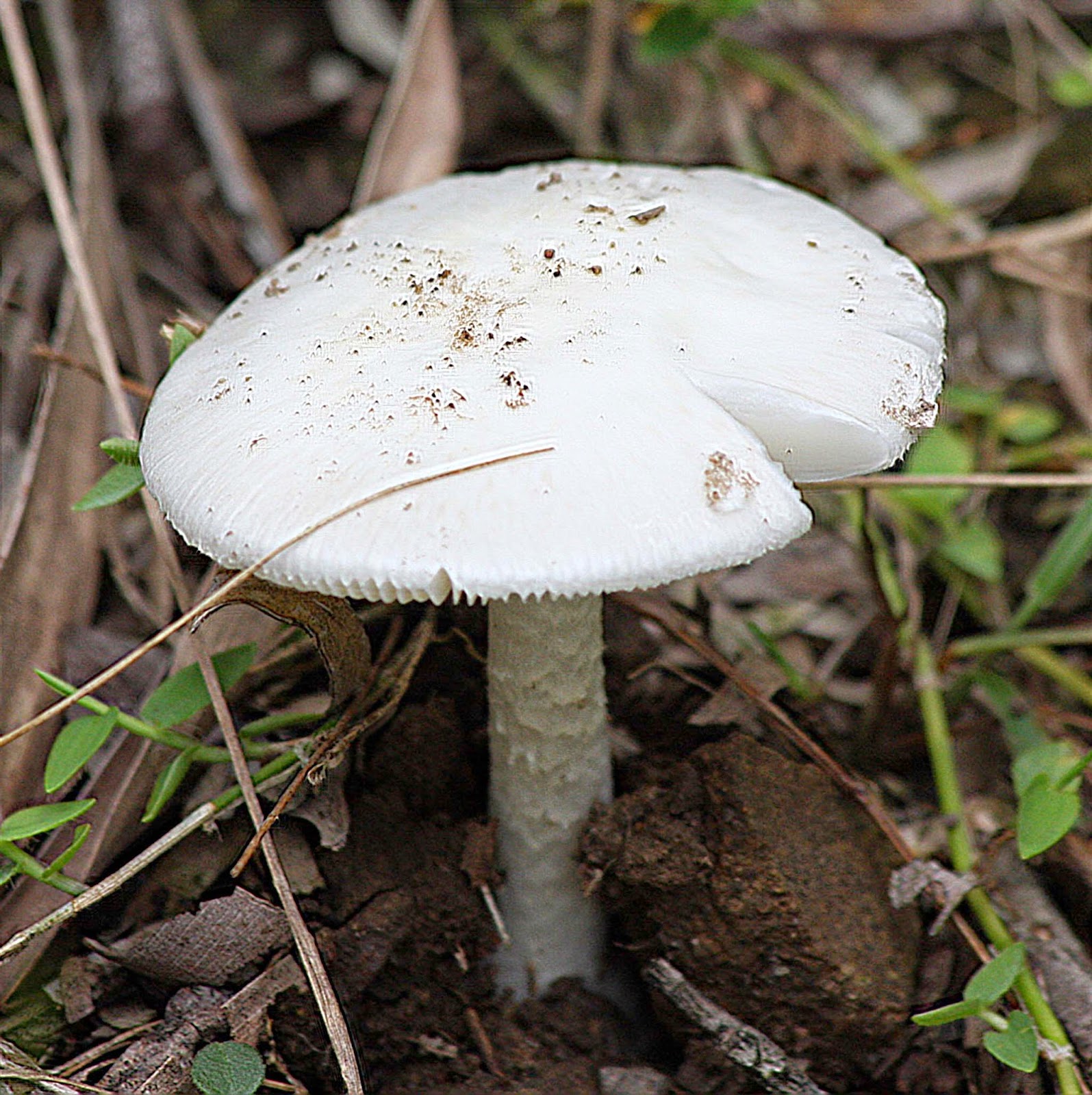
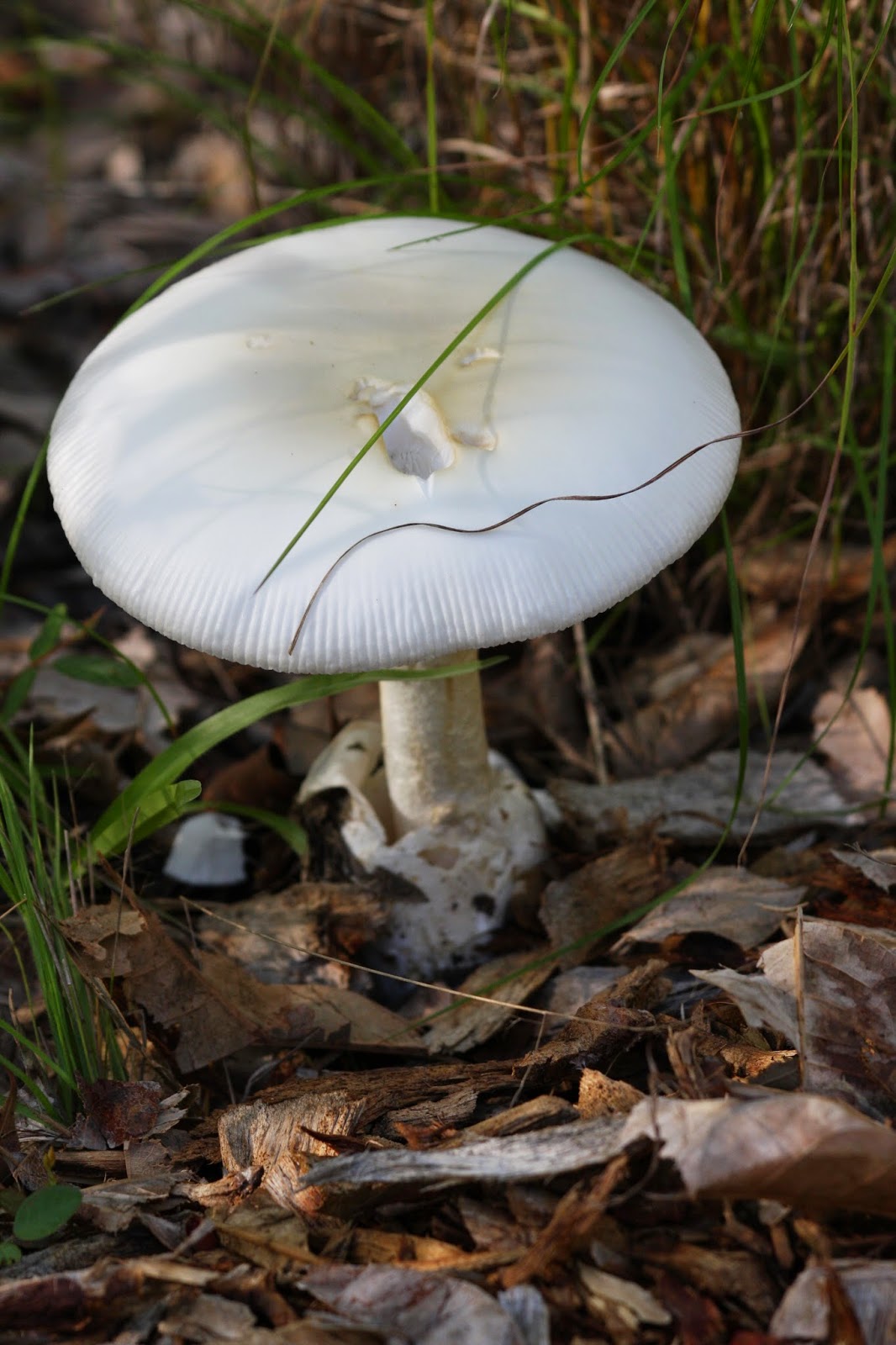
Virgin white
Soft ochres
Forests of toadstools on a mulch heap.

Bright orange fungi growing from the bark of fallen branches.
This was taken at about 8 am, interesting collar.

By 4pm it was twice the size and had umbrella'd out.
Still, enough about fungus, onto the monthly bird round up.

Regulars  (seen at least 5 days in the week)

Australian Magpie
Bar-shouldered Dove
Bronzewing
Brown Honeyeater
Channel-billed Cuckoo
Double-barred Finch
Galah

Family of Galahs with a juvenile in the centre.

Little Corella

Little Corellas in the Silky Oak

Olive-backed Oriole
Pacific Black Duck
Peaceful Dove
Pied Currawong
Plumed Whistling Duck


Plumed Whistling Ducks on the water.

Purple Swamphen

Water off a duck's (or in this case a Purple Swamp Hen) back.

Rainbow Lorikeet

Rainbow Lorikeet

Spangled Drongo
Sulphur Crested Cockatoo

Sulphur Crested Cockatoo in the Silky Oak.

Torresian Crow
Variegated Fairy Wren


Male Variegated Fairy Wren in the Bougainvilleas.

White-throated Gerygone
White-throated Honeyeater
Wood Duck
Yellow-faced Honeyeater
 
 Common (Seen at least twice a week)

Black-faced Cuckoo Shrike
Forest Kingfisher
Grey Shrike Thrush
Grey Shrike Thrush with a Cicada in beak.
King Parrot
Laughing Kookaburra
Little Friarbird
Magpie Lark
Noisy Friarbird
Pale Headed Rosella

Family of Pale-headed Rosella, juvenile in the middle.

Pied Butcherbird
Red-browed Finch


Uncommon (Seen two to five times during the month)

Crested Pigeon
Dollarbird
Eastern Yellow Robin
Lewins Honeyeater
Little Pied Cormorant
Noisy Miner
Red-backed Fairy Wren

Juvenile male (above) and female Red-backed Fairy Wrens

Swamp Harrier
Wedge-tailed Eagle
Welcome Swallow
White-headed Pigeon
White-throated Treecreeper
White-faced Heron
Yellow-tailed Black Cockatoo

Rare (Seen only once)

Azure Kingfisher
Brown Cuckoo DoveCollared Sparrowhawk
Eastern Whipbird
Leaden Flycatcher
Mallard
Scaly-breasted Lorikeet
Willie Wagtail
Which tots up to 56-species.A drop of four species from last year, which is surprising as the land has now fully recovered from the hail storm on Nov 2013.

Wednesday, December 31, 2014

Summer rises

Last day of the month and year, I better get my skates on and get the November post out! November followed the continuing theme of dry days although the weather was beginning to warm as we finally reached summer.  The days were marginally longer (no long summer nights like you get back in the UK!) and the garden was looking very dry and very tired. The Grevilleas flowers were coming to an end and even the Bougainvilleas were beginning to run out of puff.  The dams were almost a metre off their normal height and several of the lilies that were trying to flower had been beached. The Milfoil was doing its best to add a splash of sunny yellow along the margins of the Lap Swamp, but the back dam was still looking green and murky thanks to the Plumed Whistling Ducks. According to the weather people Queensland had received only a fraction of its normal annual rainfall and although we weren't suffering anything like those towns and properties in the west of the state the forest floor was very crackly and dry under foot.

With all the dry weather the strimmer (whipper-snipper in Australia) was gathering cobwebs in the shed and most of my attention was on keeping the chooks from dying of heat stroke. A couple of days were really hot, nudging past 40 degrees, but I've now learned how to manage the heat better. The pullets have a tarp shade tent over their run and I open all the coop doors and laying box lids and that allows what breeze there is to flow through the coops. The chicks in the nursery would be moved each day as the sun swung around the house. By late morning I'd move them from the nursery into a caged frame on a table on the back deck and then again in the afternoon to a second nursery in the now shaded back garden.  I had to move the brooders of the really young ones indoors, into the air-conditioning, as the heat in the garage became stifling.  In the end I still lost a couple of the younger pullets, but it could have been a lot worse.  Despite all the heat the chooks kept laying and eventually I decided to stop putting eggs aside for the incubators with the full summer in sight as I would have had too many chicks indoors.

Another problem that reared its head was a rat infestation in my workshop.  Monty the cat did his best to keep the numbers down, but eventually I had to turn to laying poison. I really didn't want to go down this path, especially as the danger of one of the cats or dogs eating a poisoned rat was real, but I carefully monitored the surrounds and picked up any carcasses before this could happen, and I think we've got the problem whipped for the time being.

Down on the dams the Purple Swamphens played a continual cycle of building new nest, mating, and then abandoning the nest and moving to a new site before starting the process again. I've been really hoping for a group of gangly moorhen chicks, but they are still at it now.

Nest number 3

At the end of the month we were treated to the arrival of a mother Pacific Black Duck and ten freshly minted ducklings, which have kept me engaged ever since.

Momma duck and her brood.
and of course, Nitesh the Peacock has continued to enthrall me.


Well it's time for the monthly bird count....

Regulars  (seen at least 5 days in the week)

Australian Magpie

Bar-shouldered Dove
Bronzewing
Channel-billed Cuckoo

Channel-billed Cuckoo

Common Mynah
Double-barred Finch

Galah
Laughing Kookaburra
Little Corella
Little Friarbird
Magpie Lark
Noisy Friarbird
Noisy Miner
Olive-backed Oriole
Pacific Black Duck


Pacific Black Duck


Peaceful Dove


Peaceful Dove

Pied Currawong
Plumed Whistling Duck
Purple Swamphen

Rainbow Lorikeet


Rainbow Lorikeets


Sulphur Crested Cockatoo
Yellow-faced Honeyeater
Welcome Swallow
White-throated Gerygone
Wood Duck
Torresian Crow

 Common (Seen at least twice a week)

Black-faced Cuckoo Shrike
Brown Honeyeater

Buff-banded Rail
Forest Kingfisher
Grey Shrike Thrush
King Parrot
Pale Headed Rosella

Pale-headed Rosella

Pied Butcherbird
Spangled Drongo
Variegated Fairy Wren
White-throated Honeyeater
White-throated Treecreeper


Uncommon (Seen two to five times during the month)

Blue-faced Honeyeater
Brown Cuckoo Dove
Cattle Egret
Cicadabird

The shy and secretive Cicadabird

Collared Sparrowhawk
Common Koel

Crested Pigeon
Dollarbird
Eastern Yellow Robin
Grey Butcherbird
Red-backed Fairy Wren
Scaly-breasted Lorikeet
Striated Pardalote
Wedge-tailed Eagle
White-headed Pigeon


White-headed Pigeon

White-faced Heron
Yellow-tailed Black Cockatoo

Rare (Seen only once)


Brown Falcon
Figbird

Female Figbird

Golden Whistler
Letter-winged Kite
Little Friarbird
Pheasant Coucal
Rufous Whistler

Male Rufous Whistler


White-bellied Sea Eagle
Willie Wagtail
Yellow-rumped Thornbill

Yellow-rumped Thornbill in the Brush Box.


Which tots up to 64-species, two better than last year and twenty better than the year before. Maybe I'm just getting better at spotting them.

Friday, November 21, 2014

One year on...

On 18th Nov 2013 we got smashed by an intense hail storm. We had to have new roofs on the house, garage, workshops and chicken coops, a new solar hot water system, down pipes, guttering and four windows.  The surrounding woodland was shredded with hardly a leaf left on any of the trees and there were numerous casualties amongst the wildlife population.

Battered Tree Ferns

Stripped Gum Trees

Nature had a nasty fit and unfortunately we were the collateral damage; however, a year has passed and the land has largely recovered.  It took some months for the foliage to return to its former glory, but it got there, and the wildlife has bounced back, but there have been changes.

The Brush Box and Casuarinas stripped of leaves.


The Back Dam and surrounding forest stripped bare.

By January the foliage was recovering well, although my tea was getting a tad cold!
By March the Tree Ferns were surging back.

And now, 12-months on the gardens are lush again.

Whether they were there before and I just didn't see them or maybe they've come along since, we have benefited from both new plants and birds. Rising from the leaf litter smaller flowers have sprung up and the native Raspberries have spread considerably.

Native Violets

and Hyacinth Orchids


The Back Dam has recovered, although more recently has taken a hammering from an overabundance of Plumed Whistling Ducks, but it's the Lap Swamp that has flourished.

The Lap Swamp after the storm

One year on

The water level is down but the reeds are flourishing.

and the margins have been colonised by Wavy Marshwort

Nymphoides crenata - Wavy Marshwort


On the wildlife front we have seen an increase in Koalas and now we hear them growling in the trees virtually every night.

An apparently contented Koala
There seems to have been an increase in the number of lizard sightings, especially the large Lace Monitors.

A Lace Monitor stalking the Back Dam wall.


The changes on the bird front have been obvious as well. On the downside we have lost the resident pair of Bush Turkeys. They haven't been seen since the storm.  On the positive side we have picked up a resident pair of Purple Swamphens, who are even now nesting on the Back Dam.

Purple Swamphen on the nest

The Plumed Whistling Ducks have been a bit of a mixed blessing. The first group of around a dozen arrived the day before the storm and stayed. Their numbers increased to a peak of 135 by April and now have dropped down to a far more reasonable 50-60 ducks.  They are beautiful birds, but they've worn away much of the grass on the Back Dam wall, eaten all the Water Milfoil on the dam (which was a weed anyway!) and for a while drove away the other ducks. I had expected them to fly off for a breeding season, but they've now been here for just over the year so maybe they are here to stay.

Plumed Whistling Ducks
Another bird that has become resident this year is the Little Corellas, with a pair now visiting the feeding stations daily.

Snowball & Snowflake at the feeding station
There also seems to have been an increase in the numbers of smaller birds such as Leaden Flycatchers and Eastern Yellow Robins, both identified as breeding on the land.

Leaden Flycatcher

Eastern Yellow Robin

And so, all in all, nature appears to have achieved its balance once more, but I do hope that we don't get another hail storm like that again.